
Low Back Pain Rehabilitation Exercises
Prescribed by Brian J. Bussard DC — Doctor of Chiropractic since 1998 · Cold Laser Therapy · Spinal Decompression · Serving Kent, Federal Way & South King County
Low back pain exercises prescribed by Brian J. Bussard DC are one of the most effective first steps toward lasting recovery. Low back pain is the number one reason people visit a chiropractor — and one of the most treatable conditions we see at Palmer Chiropractic in Kent, WA. The 10 exercises below were selected based on peer-reviewed clinical research to reduce pain, restore lumbar mobility, and build the core stability needed to prevent future episodes. Always consult your chiropractor before beginning any new exercise program.
Stretches
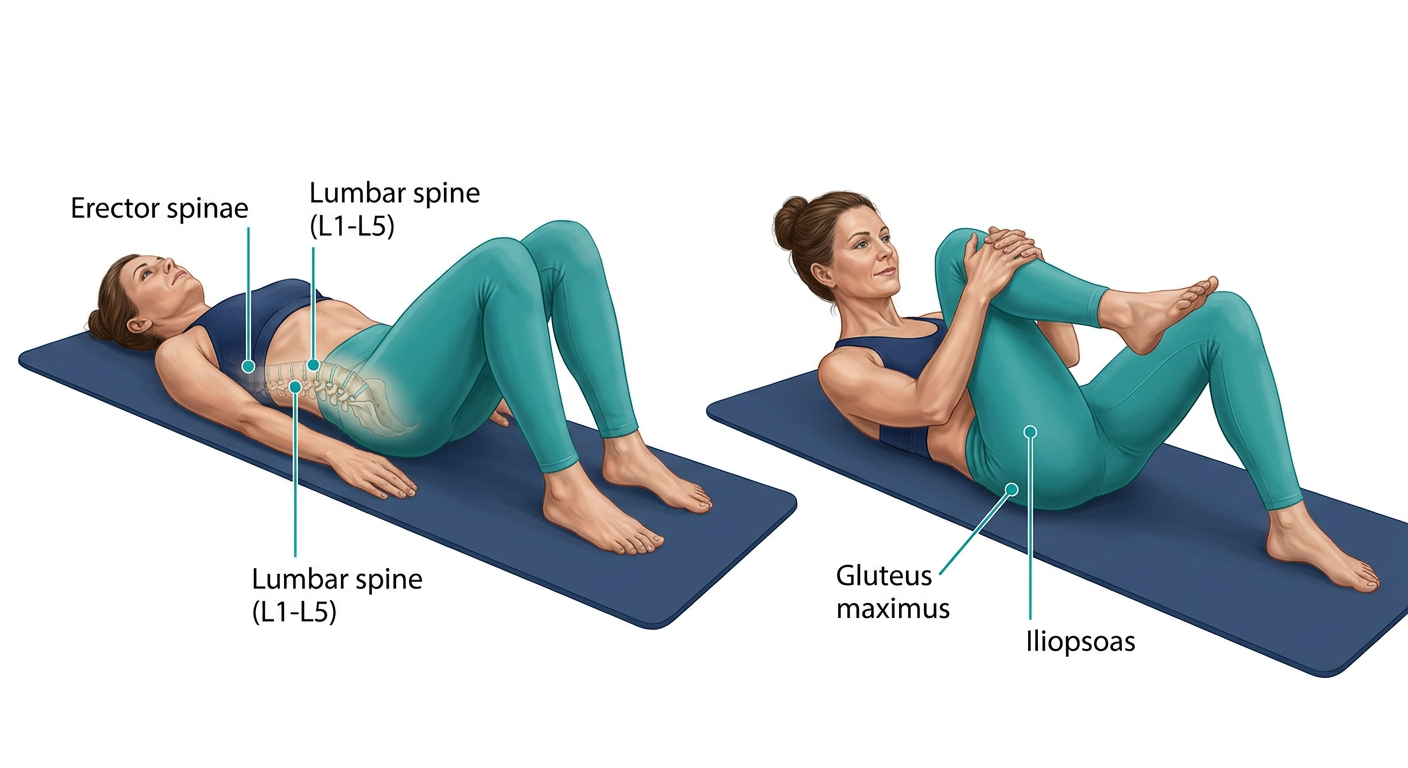
Lie on your back with legs extended. Slowly draw one knee toward your chest, clasping both hands behind the thigh. Hold and feel the gentle lumbar decompression. Release and switch sides. For a bilateral version, draw both knees in simultaneously.
Modification: Reduce hold to 10–15 sec in acute pain. Bring both knees in together with a pillow under the knees.
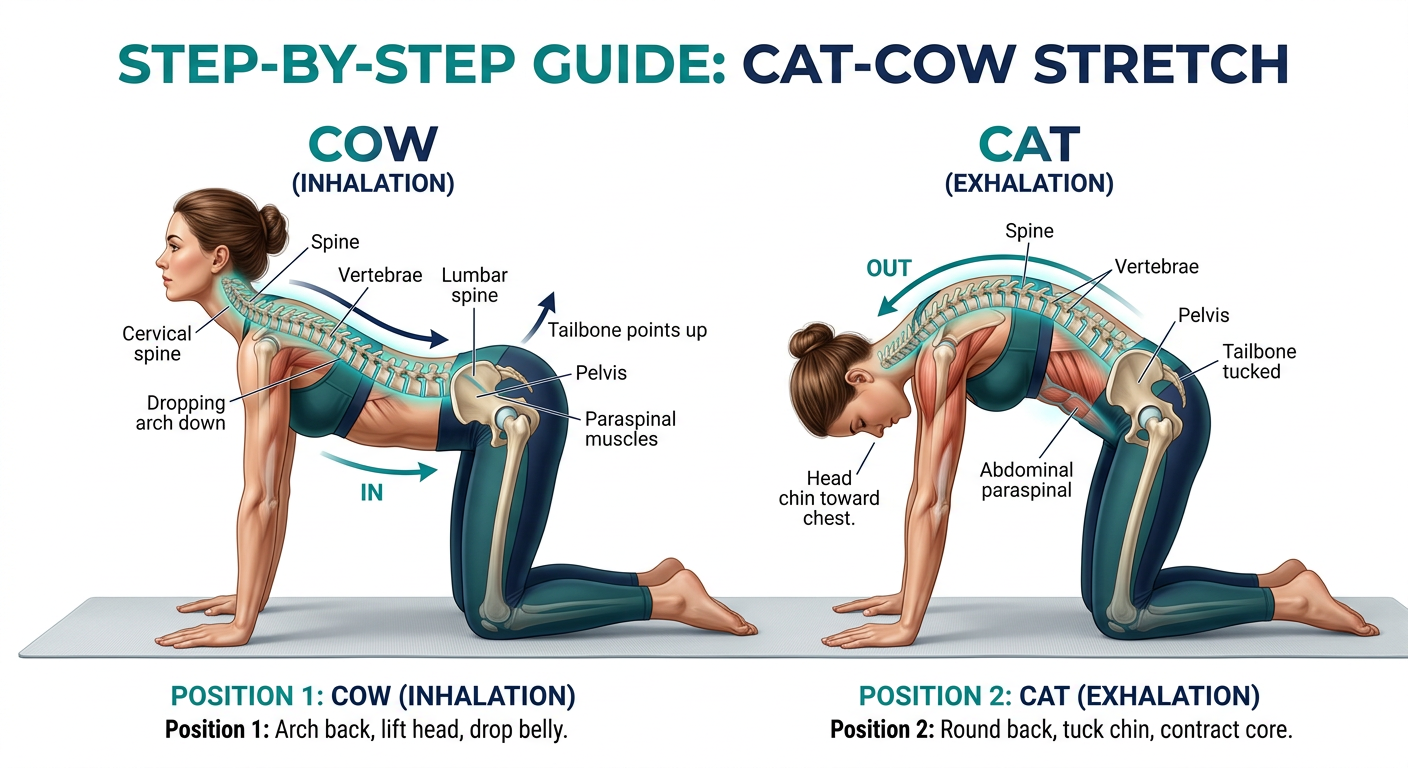
Start on hands and knees (tabletop). Inhale as you drop the belly toward the floor, lifting head and tailbone — Cow. Exhale as you round the spine toward the ceiling, tucking chin and pelvis — Cat. Move slowly and rhythmically with your breath.
Modification: Perform seated in a chair if the floor is too painful. Reduce range of motion as needed.
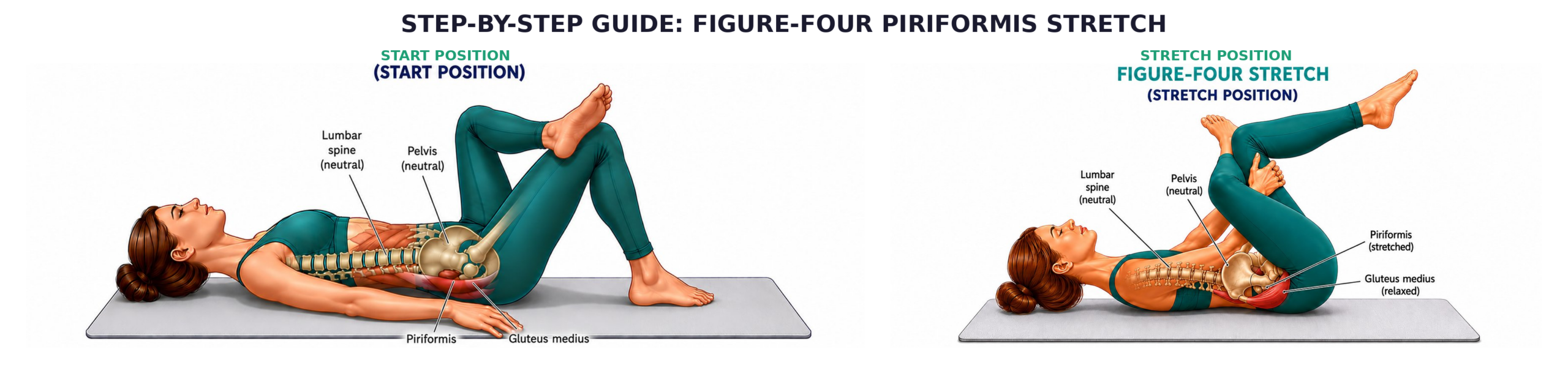
Lie on your back. Cross one ankle over the opposite thigh just above the knee, forming a "4" shape. Slowly lift the bottom leg toward your chest until you feel a deep stretch in the buttock of the crossed leg. Keep the spine flat on the floor throughout.
Modification: Keep the bottom foot on the floor rather than lifting if hip mobility is limited.
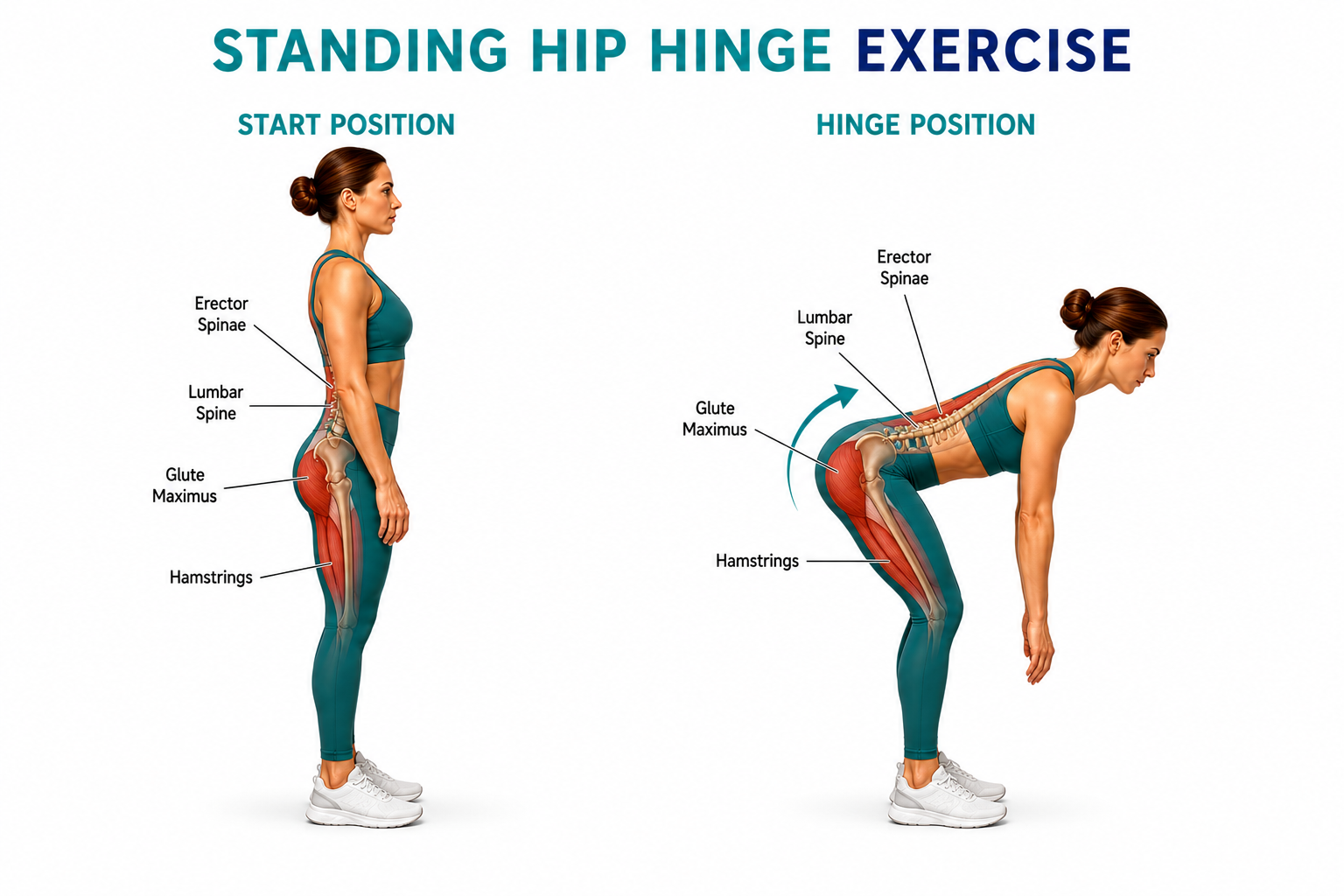
Stand with feet hip-width apart and a slight bend in the knees. Hinge forward from the hips — not the waist — keeping the spine long and neutral. Lower the torso until you feel a stretch through the hamstrings and lower back. Return by driving the hips forward.
Modification: Hold onto a dowel or wall for balance. Reduce depth if hamstring tightness limits form.
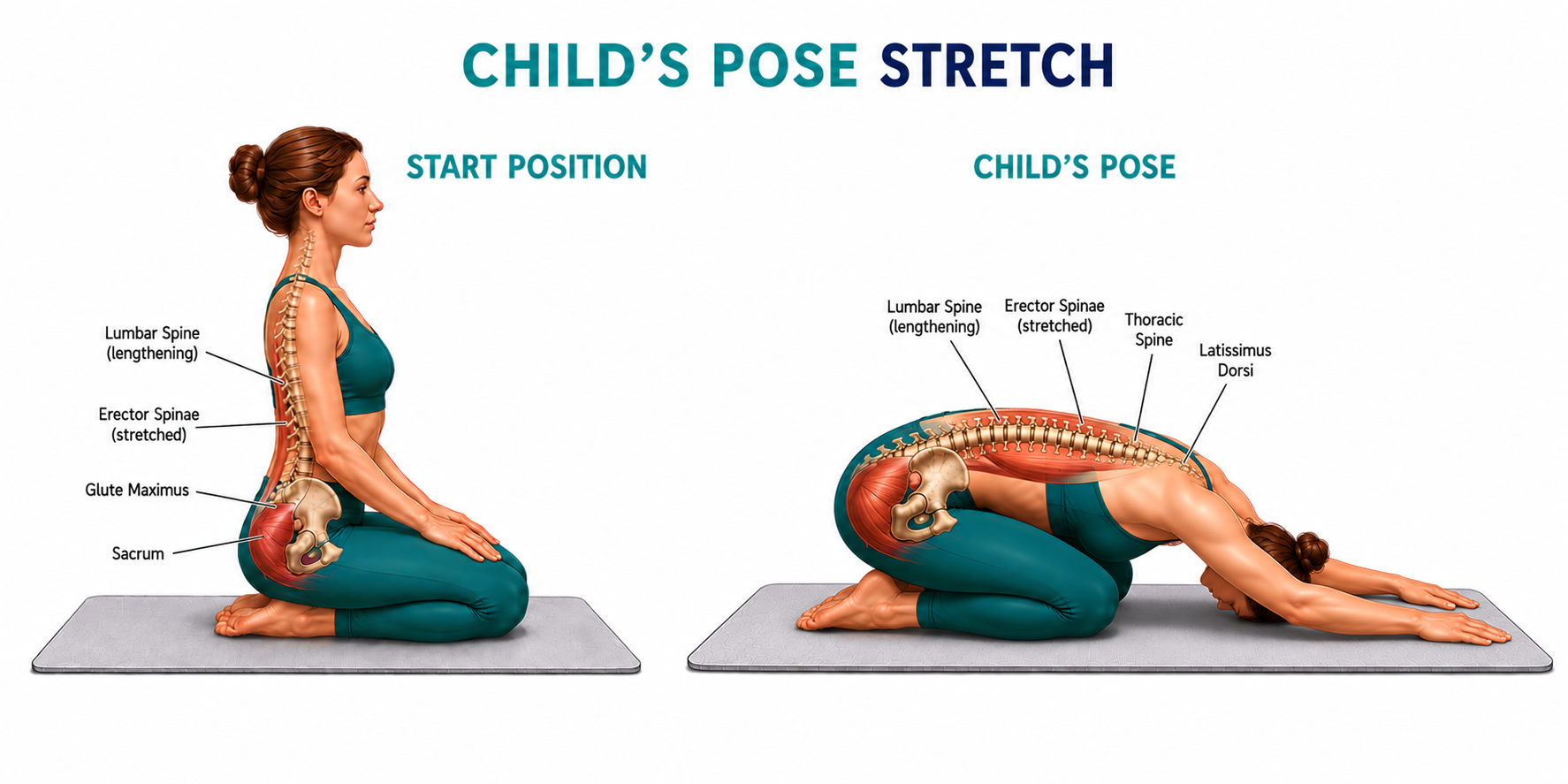
Kneel on the floor and sit back toward your heels. Reach both arms forward on the floor and lower your forehead down. Breathe deeply and let the lower back gently decompress with each exhale. Hold comfortably without forcing the stretch.
Modification: Place a pillow between thighs and calves if knee flexion is uncomfortable. Widen knees for a deeper hip stretch.
Motor Control
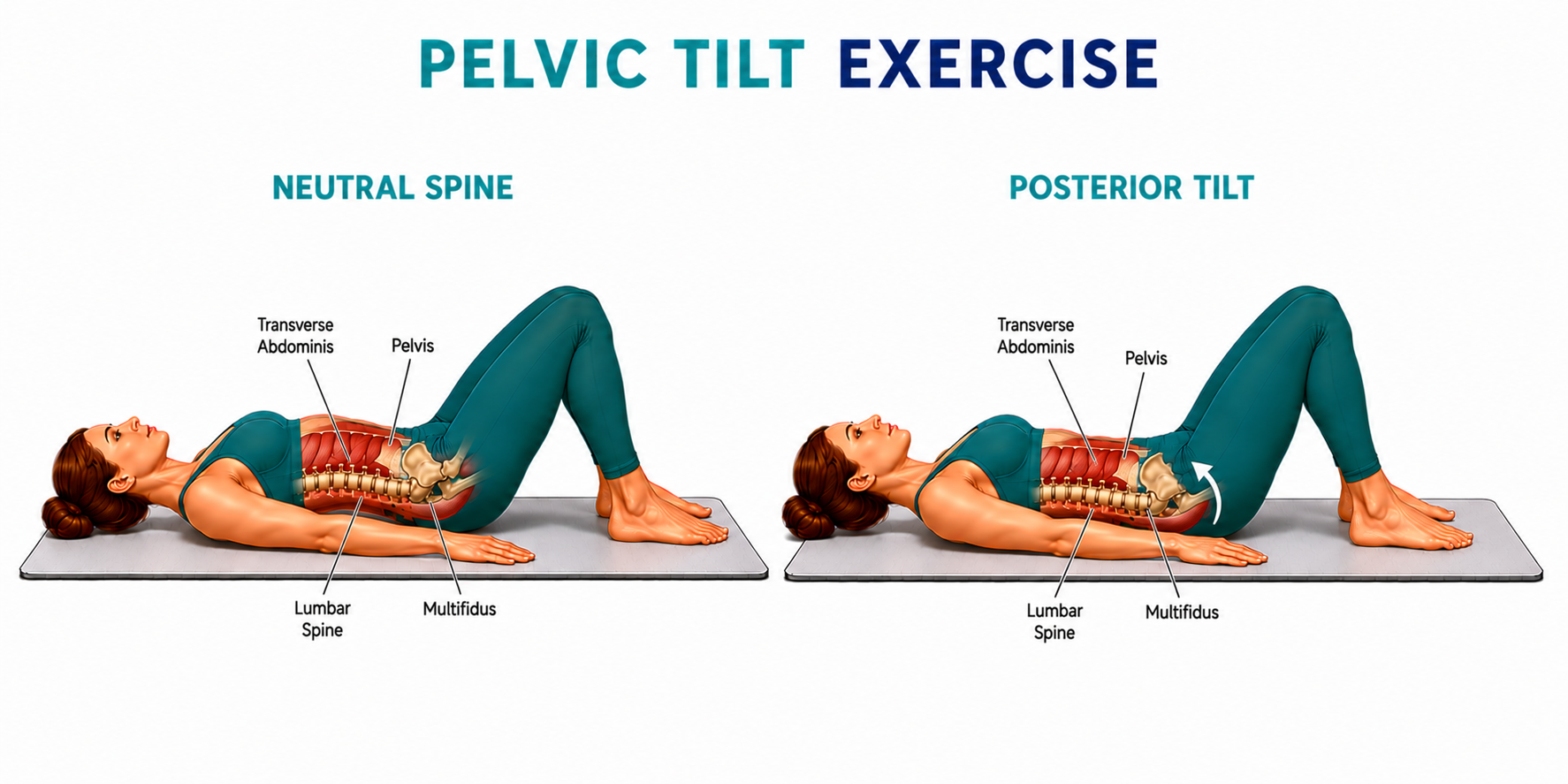
Lie on your back with knees bent and feet flat. Gently flatten the lower back against the floor by contracting the abdominals — as if drawing the navel toward the spine. Hold briefly, then release and allow the natural lumbar curve to return. This is a small, controlled movement — not a full bridge.
Modification: Can also be performed standing against a wall. Reduce hold time if core fatigue develops quickly.
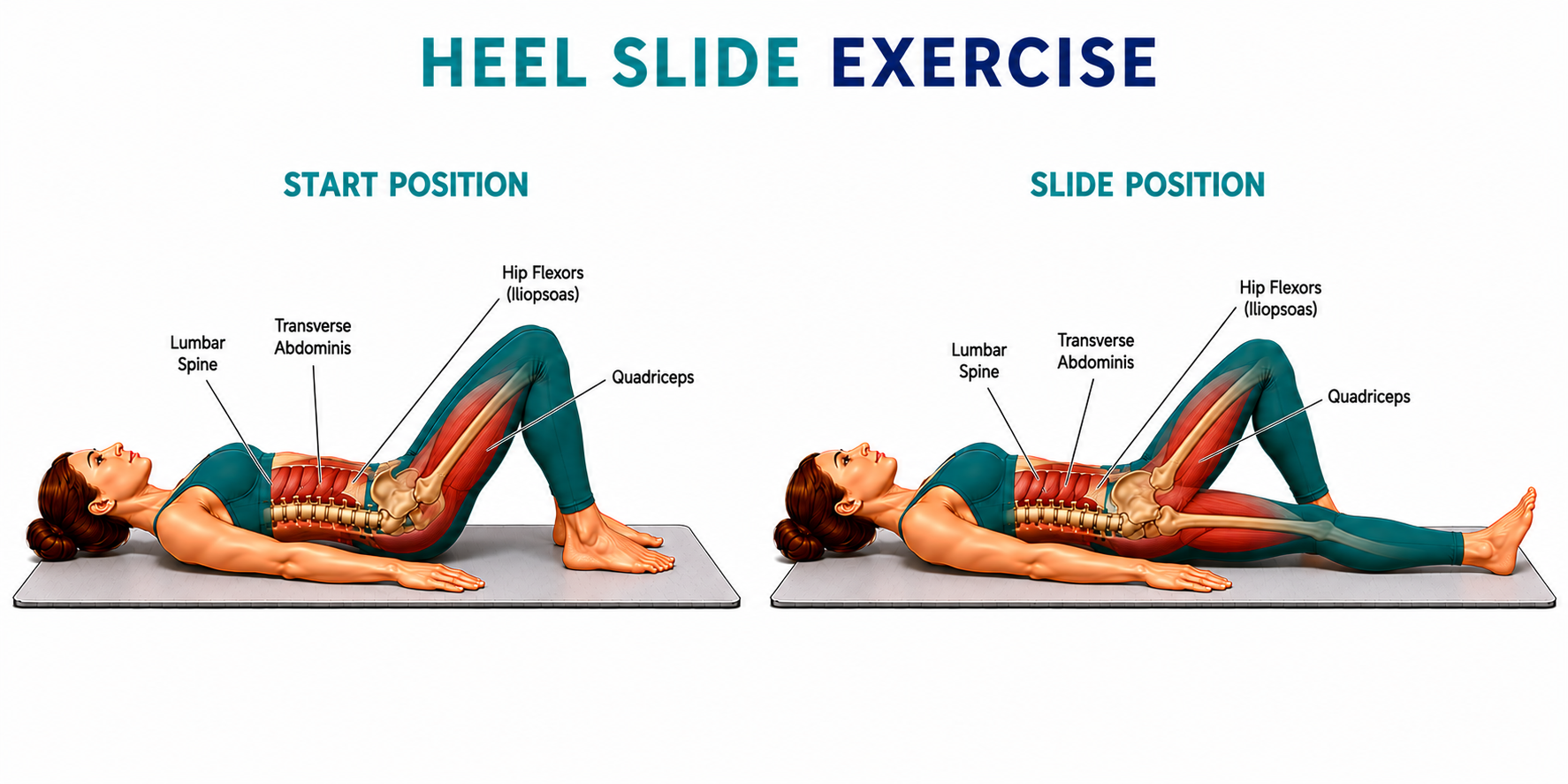
Lie on your back with knees bent. Engage the core gently and slowly slide one heel along the floor, straightening the leg completely. Keep the lower back flat and pelvis stable throughout. Slide the heel back to the starting position and repeat on the other side.
Modification: Stop the slide partway if the low back lifts off the floor. Reduce range until core control improves.
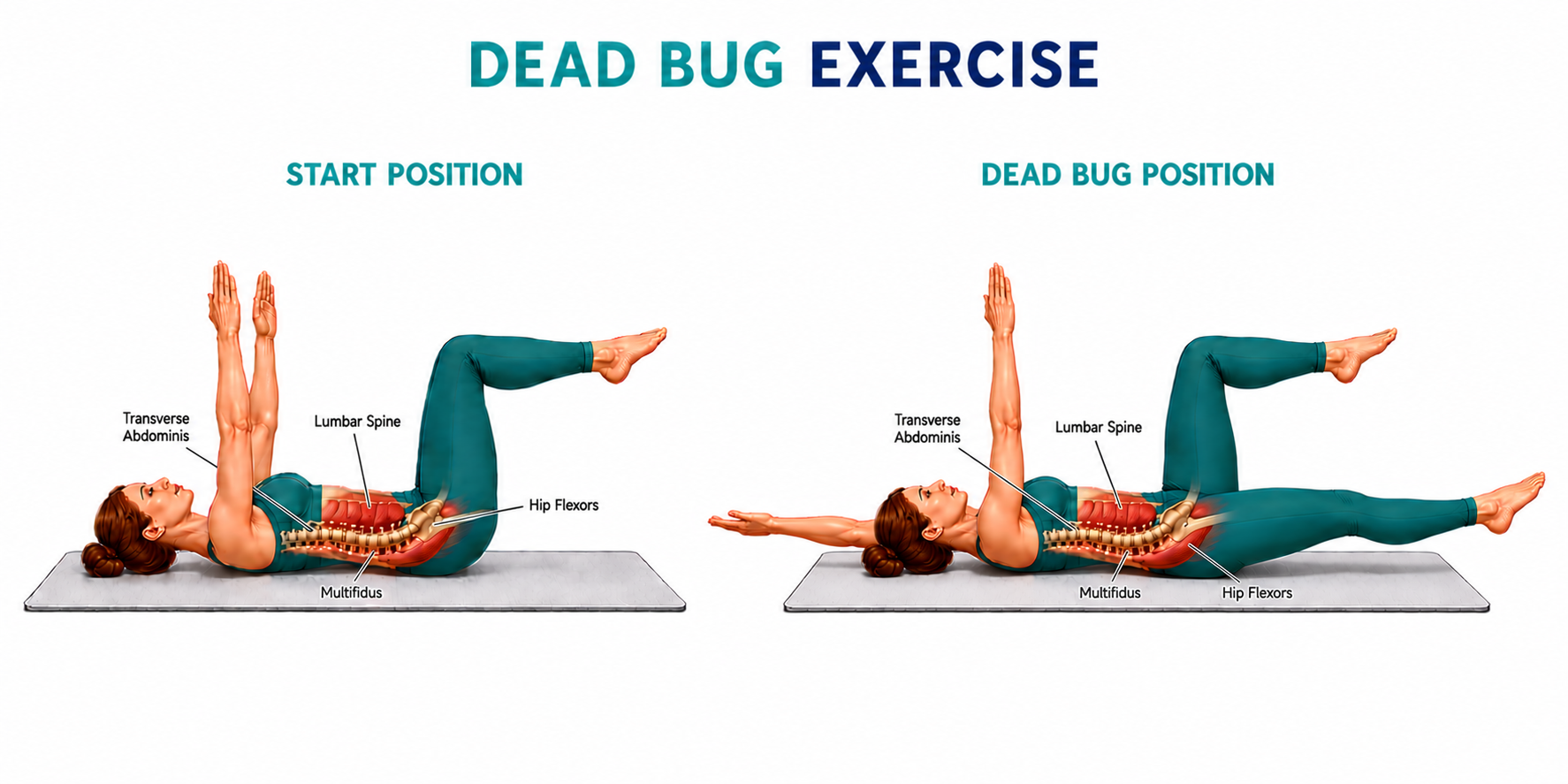
Lie on your back, arms toward ceiling, hips and knees at 90°. Press the lower back gently into the floor. Slowly lower one arm overhead and the opposite leg toward the floor simultaneously — keep the back flat. Return and alternate sides.
Modification: Lower only the arm OR the leg at first. Stop if the low back lifts off the floor.
Strengthening
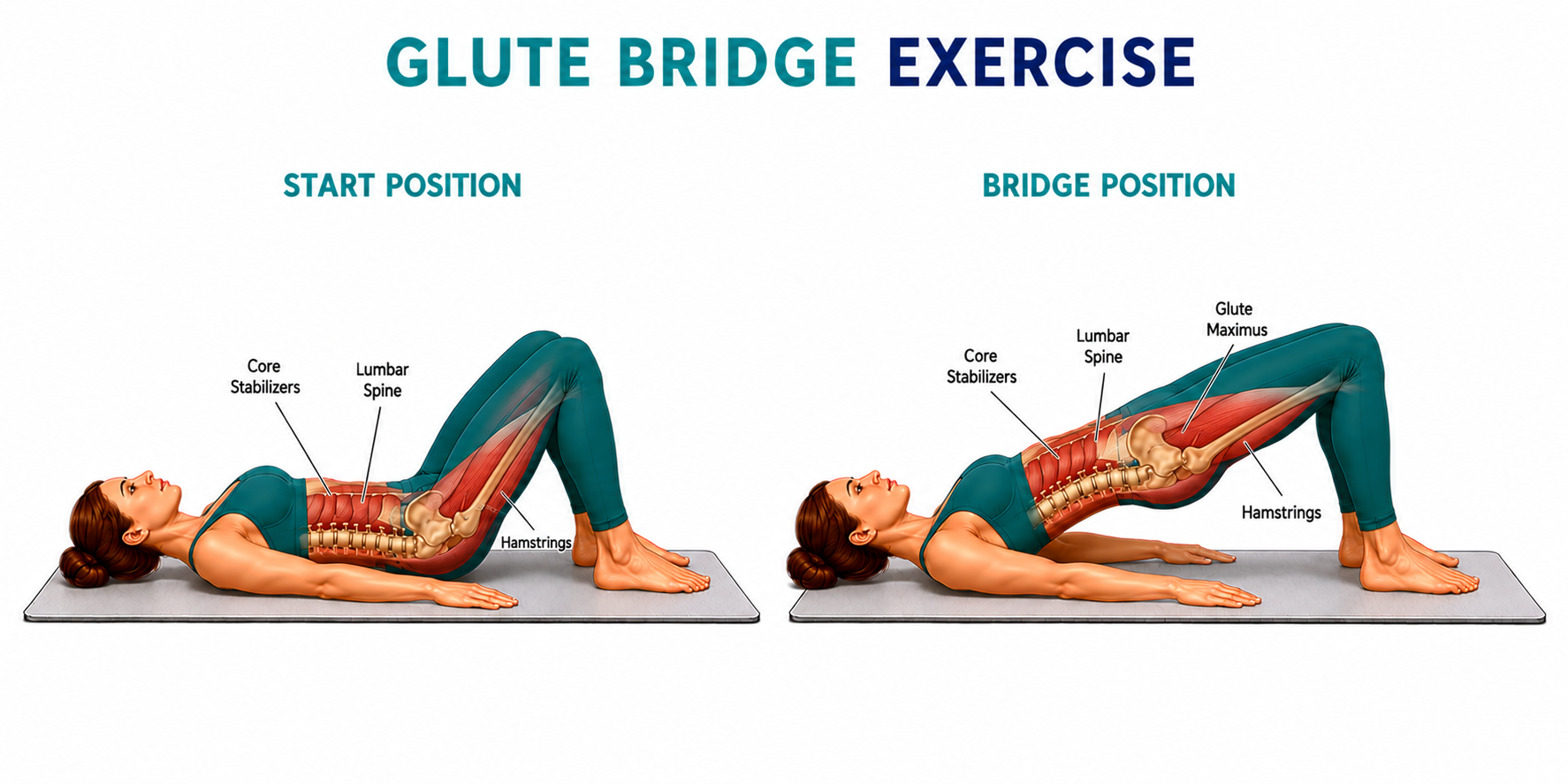
Lie on your back with knees bent and feet flat, hip-width apart. Press through the heels and squeeze the glutes to lift the hips until the body forms a straight line from shoulders to knees. Hold briefly at the top, then lower slowly. Avoid hyperextending the lumbar spine.
Modification: Reduce range in acute phases. Progress to single-leg bridge when strength allows.
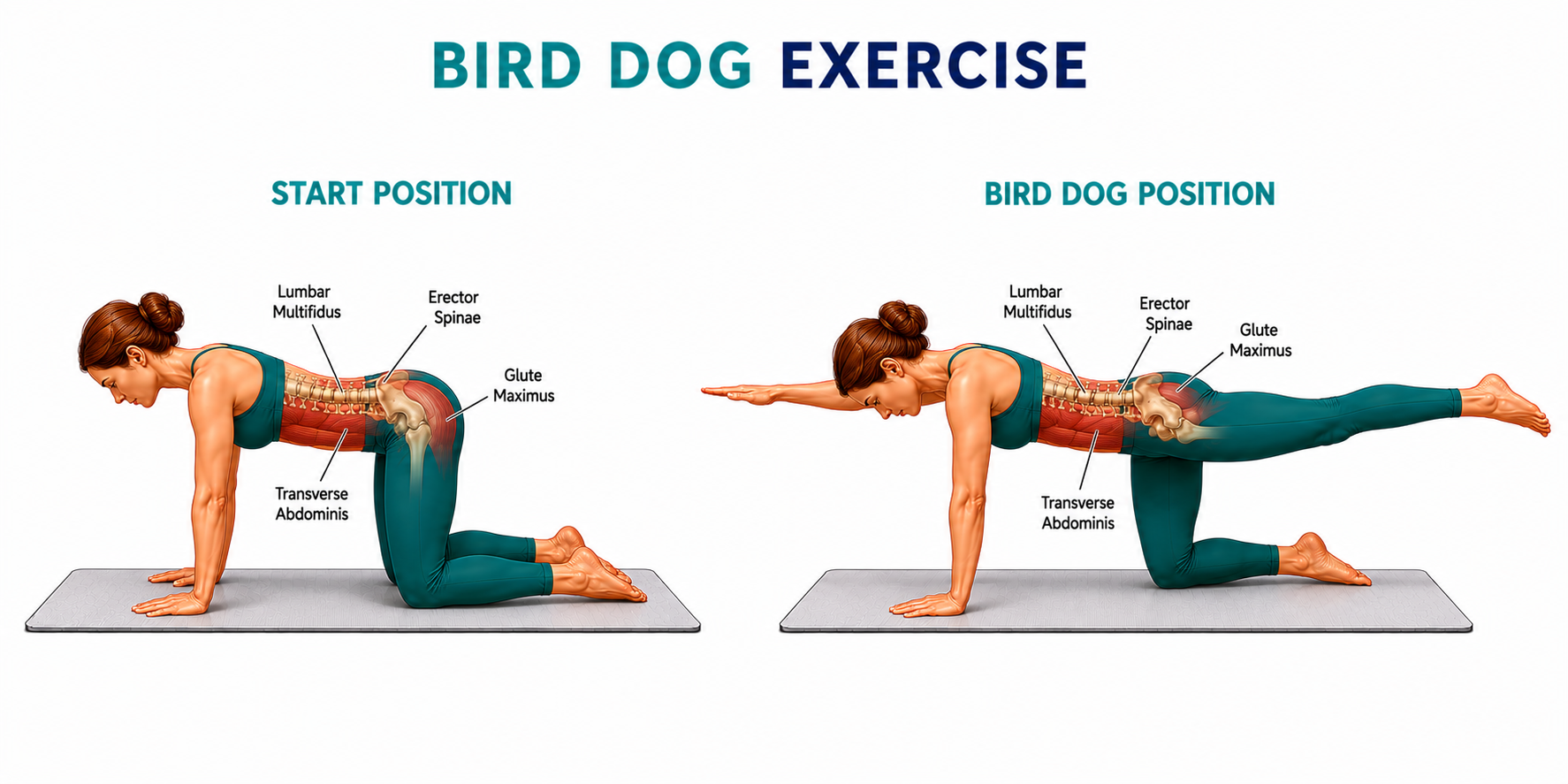
Begin on hands and knees in a neutral spine position. Gently brace the core. Slowly extend one arm forward and the opposite leg back simultaneously, keeping hips level and the low back still. Hold briefly, return with control, and alternate sides.
Modification: Start by extending just the leg or just the arm separately before combining both.
📅 Recommended Weekly Schedule
Frequently Asked Questions
Supporting Research
- McGill SM. Core training: Evidence translating to better performance and injury prevention. Strength and Conditioning Journal. 2010;32(3):33–46. View Study
- Saragiotto BT, et al. Motor control exercise for chronic non-specific low-back pain. Cochrane Database Syst Rev. 2016;1:CD012004. PubMed
- Reiman MP, Bolgla LA, Loudon JK. A literature review of studies evaluating gluteus maximus and gluteus medius activation during rehabilitation exercises. Physiotherapy Theory and Practice. 2012;28(4):257–268. PubMed
- Henchoz Y, Kai-Lik So A. Exercise and nonspecific low back pain: A literature review. Joint Bone Spine. 2008;75(5):533–539. PubMed
- Qaseem A, et al. Noninvasive treatments for acute, subacute, and chronic low back pain: A clinical practice guideline from the American College of Physicians. Ann Intern Med. 2017;166(7):514–530. PubMed
Unlock All 60 Condition Libraries
Join the Palmer Wellness Membership for full access to every exercise program — plus priority scheduling, visit discounts, and exclusive patient perks.
Palmer Chiropractic · 24837 104th Ave SE, Suite 100, Kent WA 98030 · (253) 854-7700