
Lumbar Disc Herniation Rehabilitation Exercises
Prescribed by Brian J. Bussard DC — Doctor of Chiropractic since 1998 · Cold Laser Therapy · Spinal Decompression · Serving Kent, Federal Way & South King County
Lumbar disc herniation exercises prescribed by Brian J. Bussard DC are one of the most effective first steps toward recovery. Lumbar disc herniation occurs when the soft inner material of a spinal disc pushes through its outer layer, potentially irritating nearby nerves and causing pain, numbness, or weakness in the lower back and legs. The 10 exercises below were selected based on peer-reviewed clinical research to reduce nerve irritation, restore lumbar mobility, and build the core stability needed for lasting recovery. Always consult your chiropractor before beginning any new exercise program.
Stretches
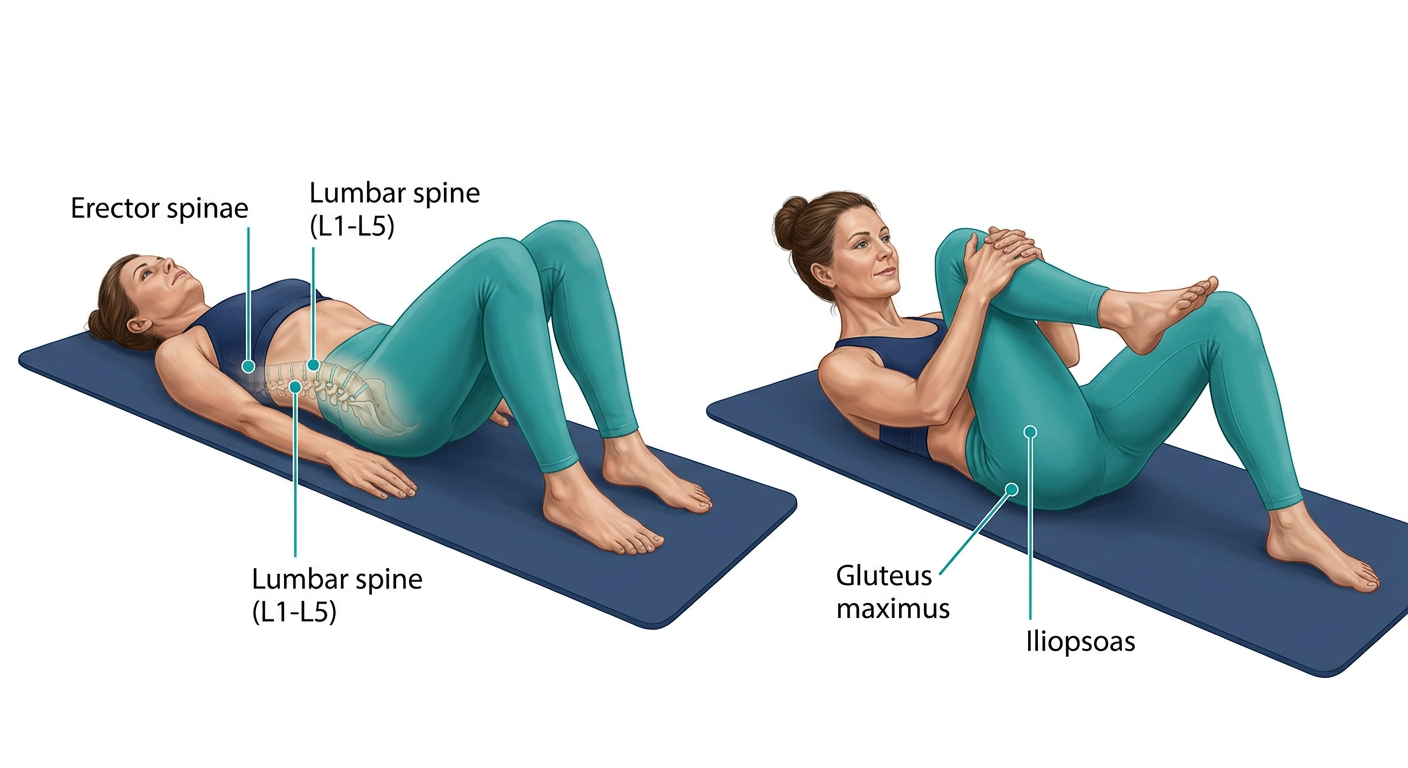
Lie on your back and gently pull one knee toward your chest, hold, then alternate sides. Decompresses the lumbar vertebrae and reduces nerve root tension associated with disc herniation.
Modification: Keep one foot flat on the floor if pulling both knees increases leg pain or discomfort.
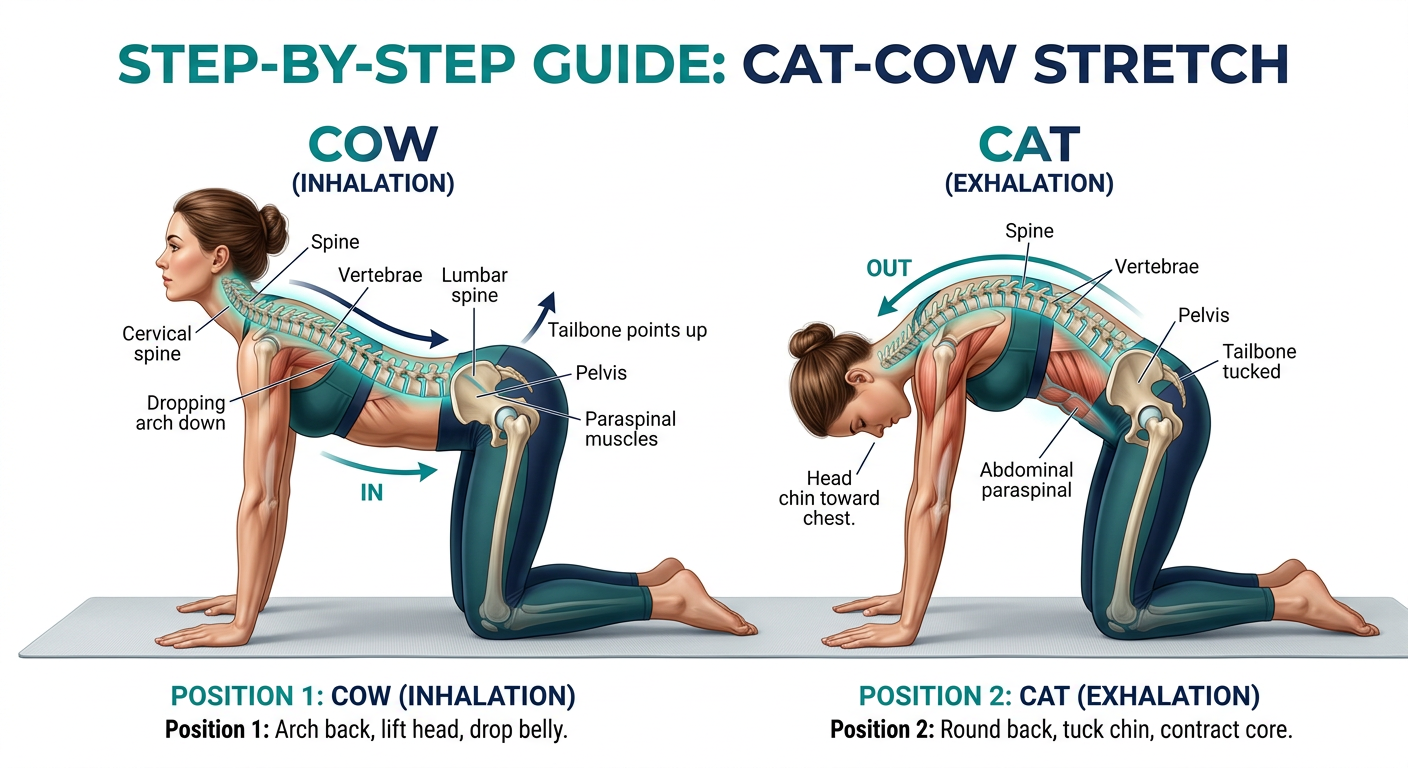
On hands and knees, alternate between arching and rounding the spine in a slow, controlled rhythm. Restores segmental lumbar mobility and improves fluid circulation in the affected disc.
Modification: Perform seated in a chair if kneeling is uncomfortable or increases symptoms.
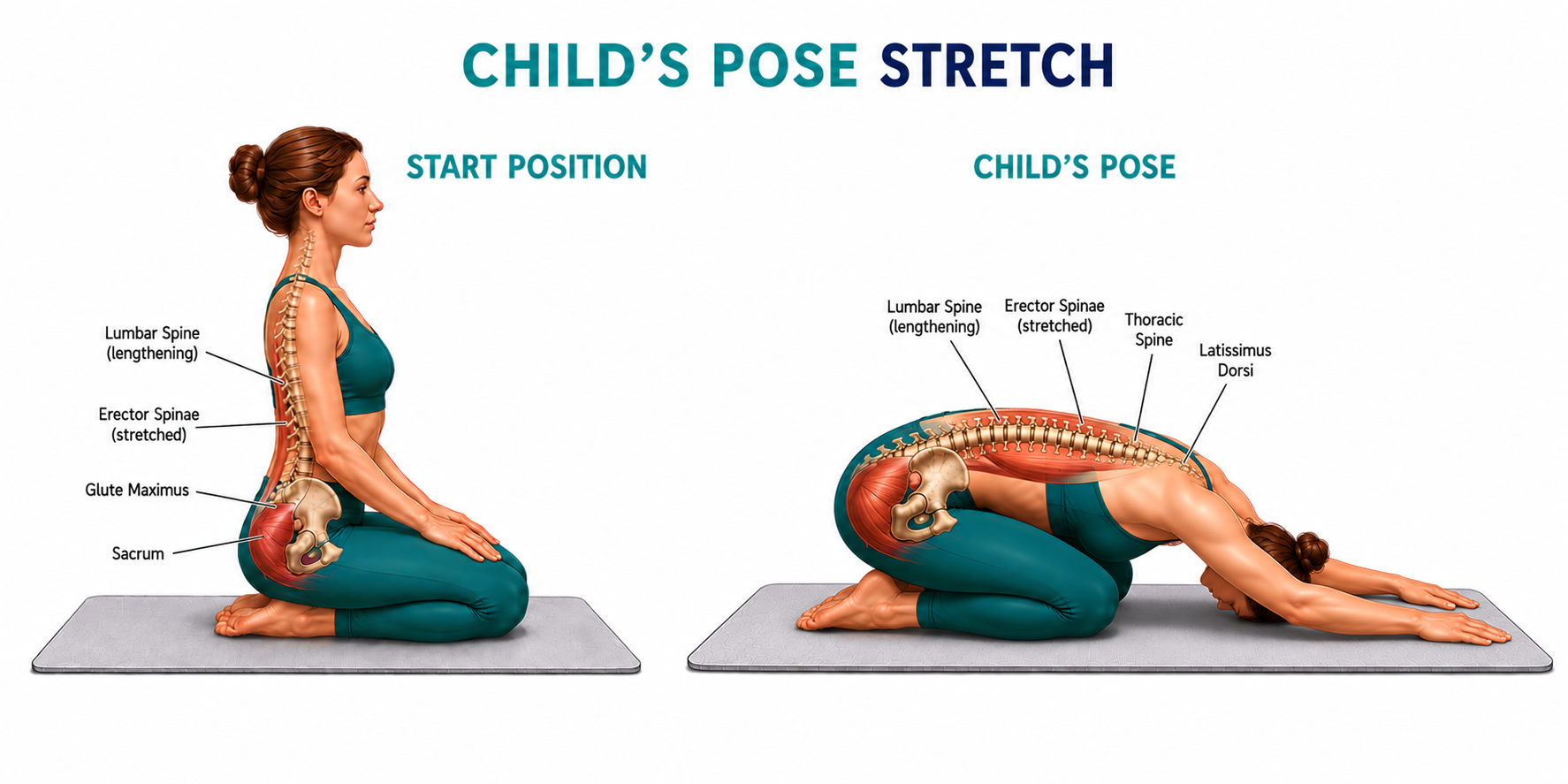
Kneel and fold your torso forward with arms extended, forehead resting on the mat. Gently lengthens the lumbar erector spinae and latissimus dorsi, reducing muscle spasm and nerve tension.
Modification: Place a pillow between your thighs and calves if sitting back on your heels is uncomfortable.
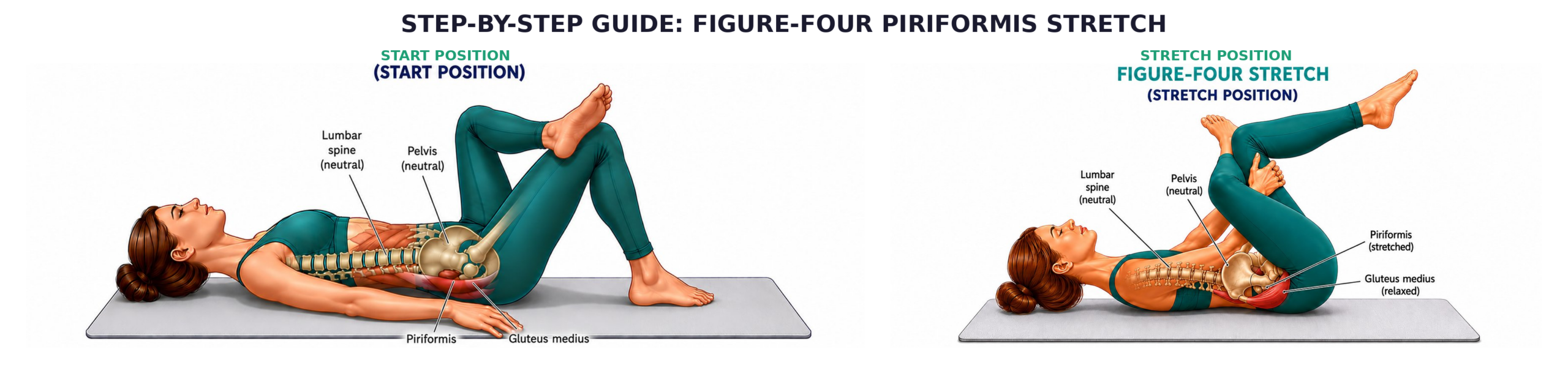
Cross one ankle over the opposite knee and gently pull toward your chest, then alternate. Releases piriformis tightness that compresses the sciatic nerve — a common contributor to disc herniation symptoms.
Modification: Keep both feet flat and cross the ankle over the knee without pulling if hip flexibility is limited.
Strengthening
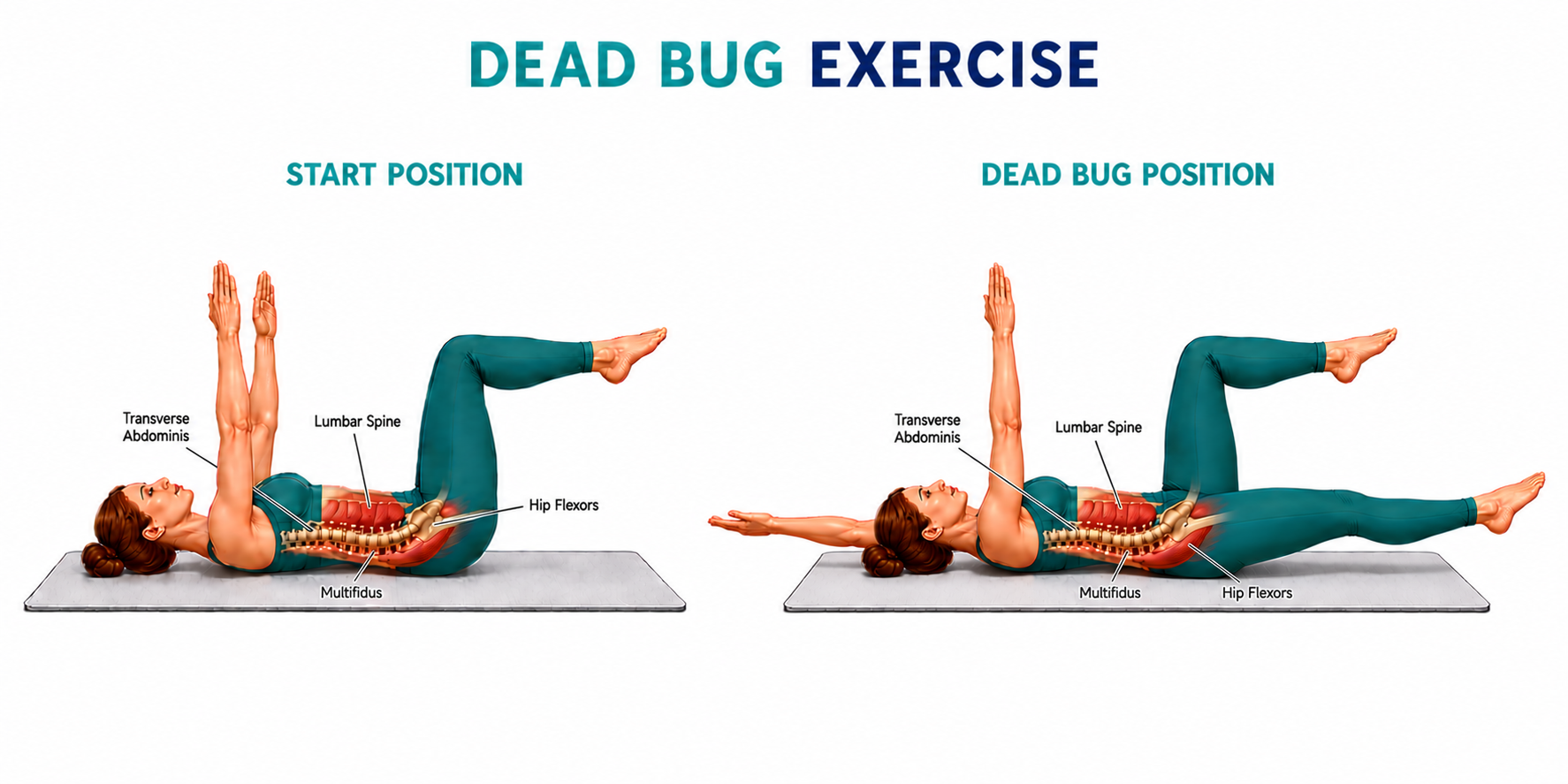
Lie on your back with arms up and knees at 90°. Slowly extend the opposite arm and leg simultaneously while pressing your lower back into the mat. Trains deep core coordination essential for disc herniation recovery.
Modification: Lower one limb at a time rather than opposite pairs until core control improves.
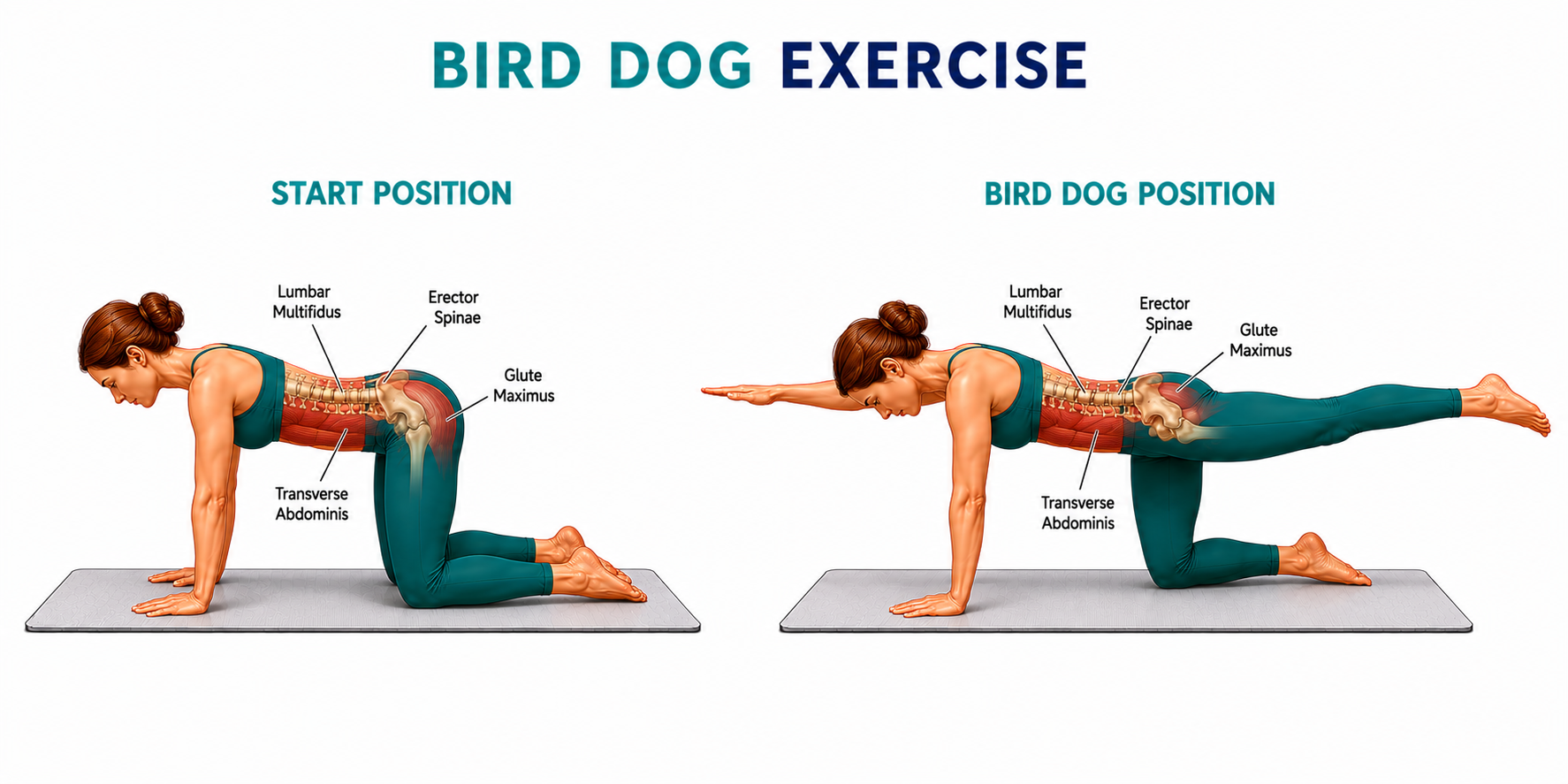
From hands and knees, extend the right arm and left leg simultaneously and hold, then alternate. A McGill-validated exercise for deep lumbar multifidus and glute maximus activation with minimal spinal load.
Modification: Start with arm-only or leg-only extension before combining both limbs simultaneously.
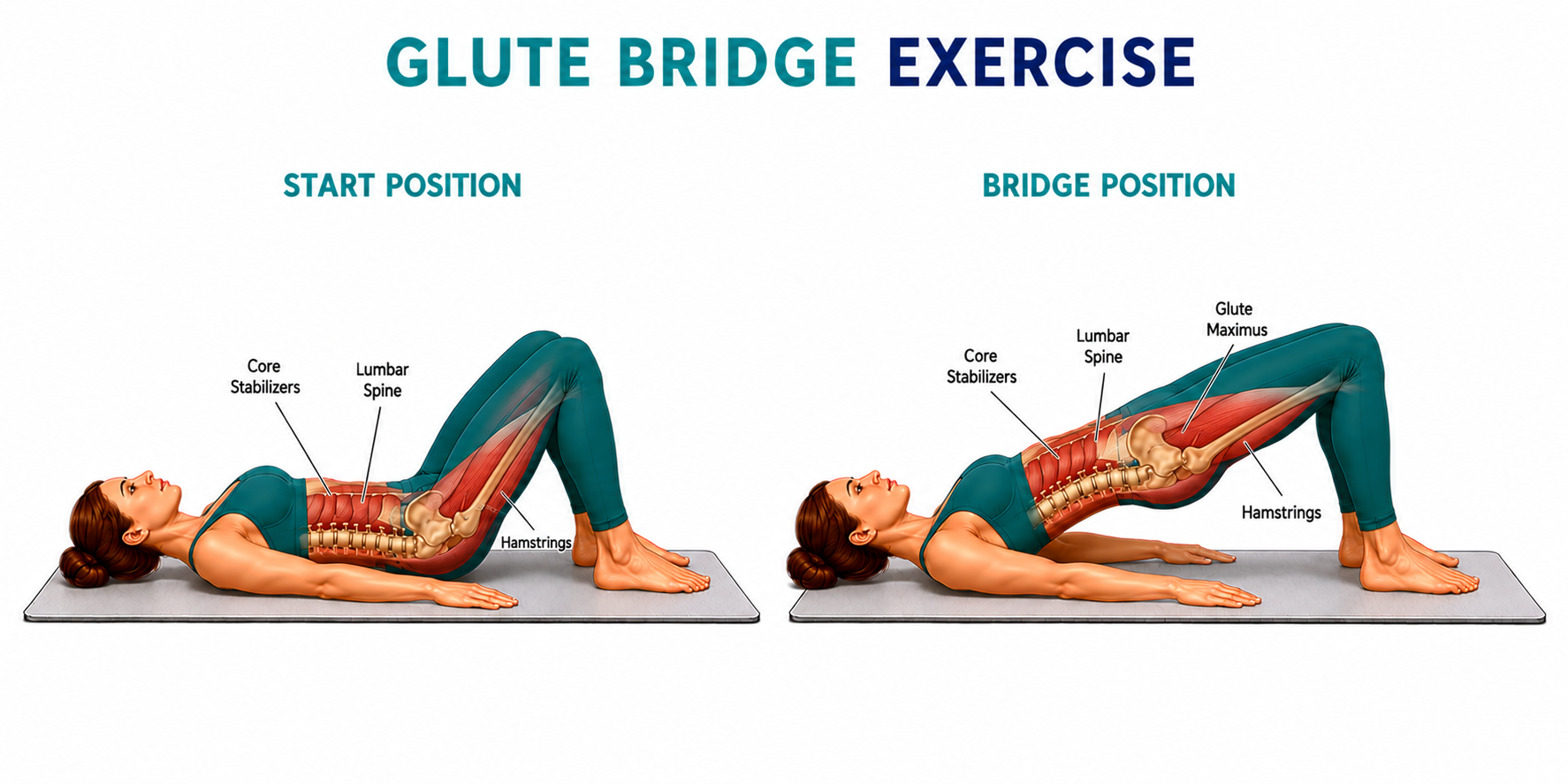
Lie on your back with knees bent, press through your heels and raise your hips until your body forms a straight line from knees to shoulders. Strengthens the glutes to offload lumbar extensors and stabilize the pelvis.
Modification: Reduce range of motion if you feel pinching in the lower back at the top of the movement.
Motor Control
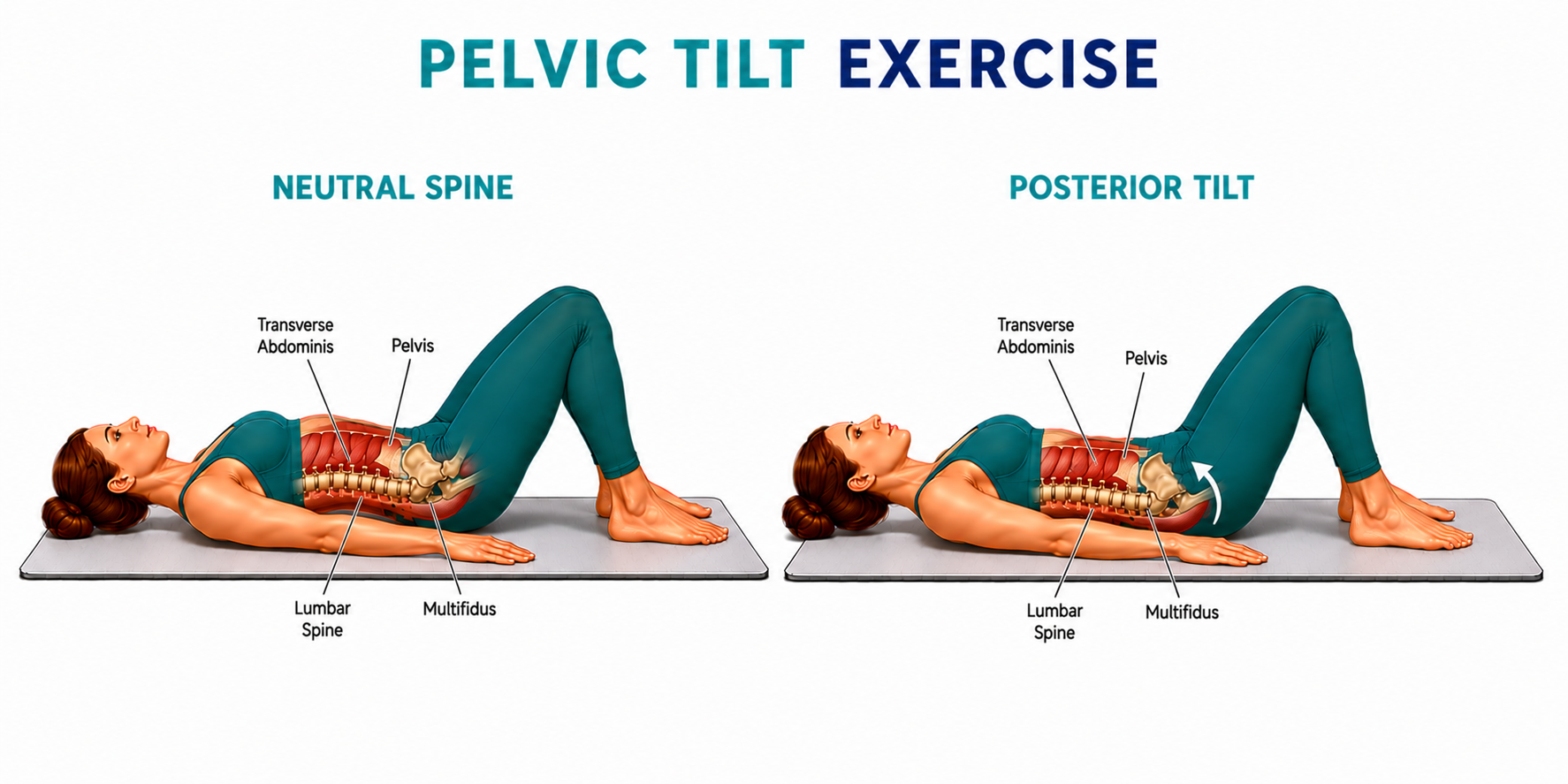
Lie on your back with knees bent and gently press your lower back flat into the mat using your abdominals. Teaches lumbar neutral position awareness — the foundation for all core rehabilitation.
Modification: Safe for even the most acute presentations — typically the first exercise prescribed after disc herniation.
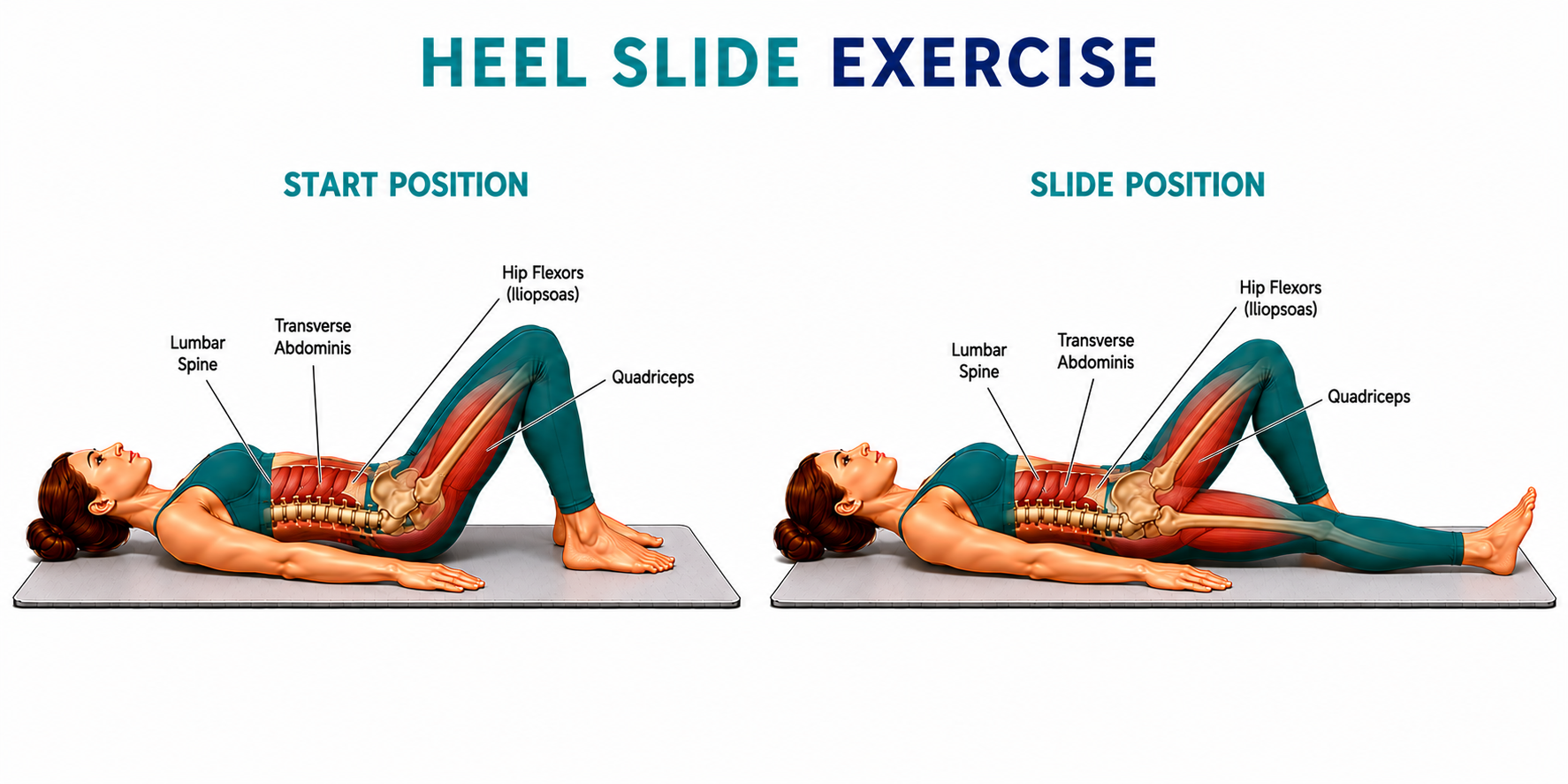
Lie on your back and slowly slide one heel down the mat until nearly straight, keeping the lower back pressed in throughout. Challenges lumbar stability with hip flexor activation at low spinal load.
Modification: Only slide to the point where you can keep your lower back pressed into the mat — stop before any arch develops.
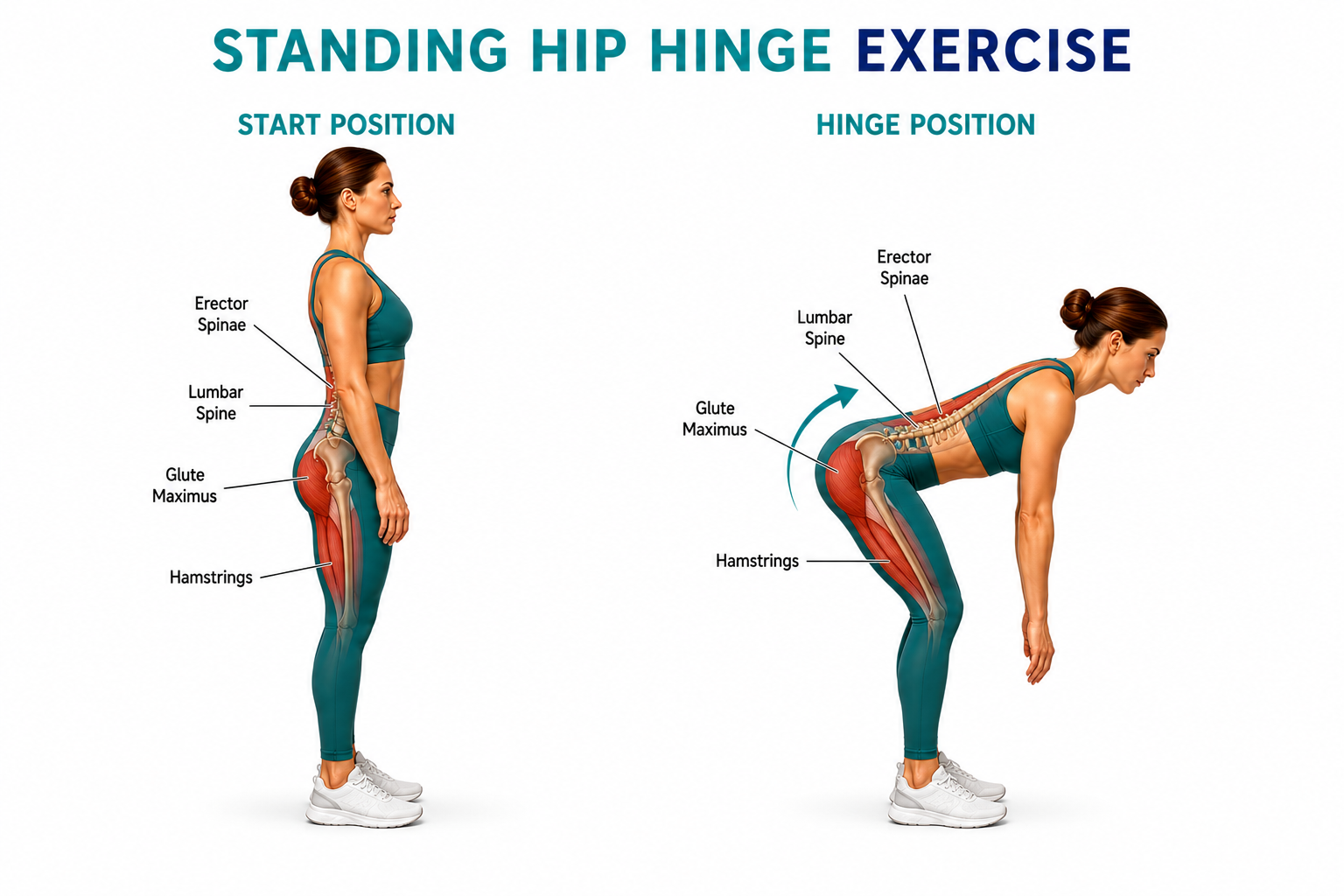
Stand feet hip-width apart and hinge forward at the hips with a completely flat back to about 45°, then drive hips forward to return upright. Teaches proper spinal mechanics for bending and lifting — critical for preventing re-injury.
Modification: Hold a dowel along your spine to get tactile feedback for maintaining a flat back during the movement.
📅 Recommended Weekly Schedule
Frequently Asked Questions
Supporting Research
- Hides JA, Richardson CA, Jull GA. Multifidus muscle recovery is not automatic after resolution of acute, first-episode low back pain. Spine. 1996;21(23):2763–2769. PubMed
- McGill SM. Low Back Disorders: Evidence-Based Prevention and Rehabilitation. Human Kinetics. 2007. View Book
- Weinstein JN, et al. Surgical vs nonoperative treatment for lumbar disk herniation: the Spine Patient Outcomes Research Trial (SPORT). JAMA. 2006;296(20):2441–2450. PubMed
- Distefano LJ, et al. Gluteal muscle activation during common therapeutic exercises. J Orthop Sports Phys Ther. 2009;39(7):532–540. PubMed
- Rubinstein SM, et al. Spinal manipulative therapy for chronic low-back pain. Cochrane Database Syst Rev. 2011. PubMed
Unlock All 60 Condition Libraries
Join the Palmer Wellness Membership for full access to every exercise program — plus priority scheduling, visit discounts, and exclusive patient perks.
Palmer Chiropractic · 24837 104th Ave SE, Suite 100, Kent WA 98030 · (253) 854-7700